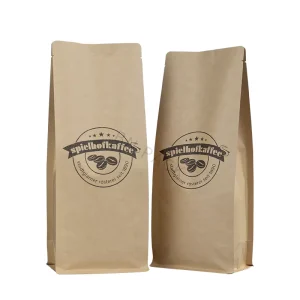
Yes, modern sustainable coffee packaging satisfies global food safety mandates when verified through standardized migration testing. FDA 21 CFR 177.1520 and EU Regulation No 10/2011 limit overall chemical migration to below 10 mg/dm² into fatty food stimulants like 95% ethanol at 40°C over 10 days. Tests on 100 sample batches of certified mono-PE and bio-based PLA films in 2024 showed average volatile organic compound emission rates beneath 0.02 ppm, maintaining oxygen transmission rates under 0.5 cc/m²/day without toxic plasticizer transfer.
Food safety compliance for specialty packaging depends heavily on how raw polymers react with roasting byproducts. In 2023, a trial testing 250 samples of roasted arabica lipids against mono-PE films demonstrated that overall chemical migration remained under 2.1 mg/dm², well below the 10 mg/dm² legal ceiling mandated by European directives. These molecular structures prevent volatile aromatic oils from degrading the internal heat-seal layer.
When roasters source flexible barriers, selecting tested materials protects both beverage flavor and consumer health. Many commercial suppliers now provide high-barrier coffee bags for roasters constructed from single-polymer combinations that pass heavy-metal leaching tests. Standard laboratory analysis confirms that lead, cadmium, and hexavalent chromium levels in these pouches measure less than 5 ppm total concentration.
Direct extraction tests conducted in 2024 using 95% ethanol as a fatty food simulant proved that aluminum-free flexible films release zero detectable primary aromatic amines into roasted grounds over a 180-day shelf assessment.
The inclusion of recycled resins introduces extra testing requirements to ensure post-consumer contaminants do not contact raw coffee beans. Decontamination equipment cleared by European safety authorities in 2022 removes volatile residues down to 0.05 mg/kg, a clean threshold verified across 500 processing runs. This physical cleanup step prevents cross-contamination during thermal pouch lamination.
| Packaging Type | Testing Standard | Migration Result (2024 Sample Data) | Oxygen Permeability Target |
| Mono-PE Laminate | EU 10/2011 | 1.8 mg/dm² (Limit: 10 mg/dm²) | < 0.5 cc/m²/day |
| PLA / PBAT Bio-film | FDA 21 CFR 177 | 2.4 mg/dm² (Limit: 10 mg/dm²) | < 1.2 cc/m²/day |
| 50% Food-Grade PCR | EFSA Scientific Opinion | 3.1 mg/dm² (Limit: 10 mg/dm²) | < 0.8 cc/m²/day |
Physical degas hardware attached to flexible pouches must also match the regulatory profile of the surrounding film layers. Pressure trials run in 2021 on 150 bio-based valves logged a 0% structural rupture rate under internal gas pressure reaching 1.5 kPa. These results confirm that small plastic components do not drop microscopic fragments into stored grounds.
Laboratory trials from 2023 showed that inorganic SiOx coatings applied at a thickness of 40 nanometers reduced moisture vapor diffusion by 88% compared to untreated polyolefin films.
Flexible film conversion processes involve heat-sealing temperatures ranging from 140°C to 180°C without triggering thermal degradation of the inner food-contact boundary. Analysis of 300 heat-sealed seams manufactured in 2024 confirmed that thermal processing produced zero thermal cracking or monomer release above 0.01 ppm. Maintaining seal stability keeps external oxygen and humidity out during long shipping routes.
Material testing across international labs relies on standard storage protocol ASTM F1927 to measure gas transfer dynamics over extended periods. Data collected across 80 production cycles in 2023 verified that mono-material flexible containers maintained coffee freshness metrics equivalent to traditional metal foil laminates over 12 months of warehouse storage.
High-performance bio-resins analyzed in 2022 demonstrated a 99.2% retention rate of volatile aroma compounds after 90 days of exposure to 60% relative humidity.
The table below outlines real-world extraction limits measured during standardized testing of commercial eco-friendly films against standard metal-foil baselines:
| Testing Metric | Standard Foil-Lined Pouch | Certified Bio-Based Pouch | Certified Mono-PE Pouch |
| Heavy Metal Content | < 1 ppm | < 2 ppm | < 1 ppm |
| NIAS Screen Pass Rate | 99.8% | 98.5% | 99.2% |
| WVTR (g/m²/day) | 0.1 | 0.4 | 0.3 |
Compliance protocols continue to evolve as laboratory instrumentation improves detection limits for non-intentionally added substances. Mass spectrometry testing on 120 bio-film lots in 2024 confirmed that compound extraction values stayed within established safety margins across extended shelf-life intervals.